
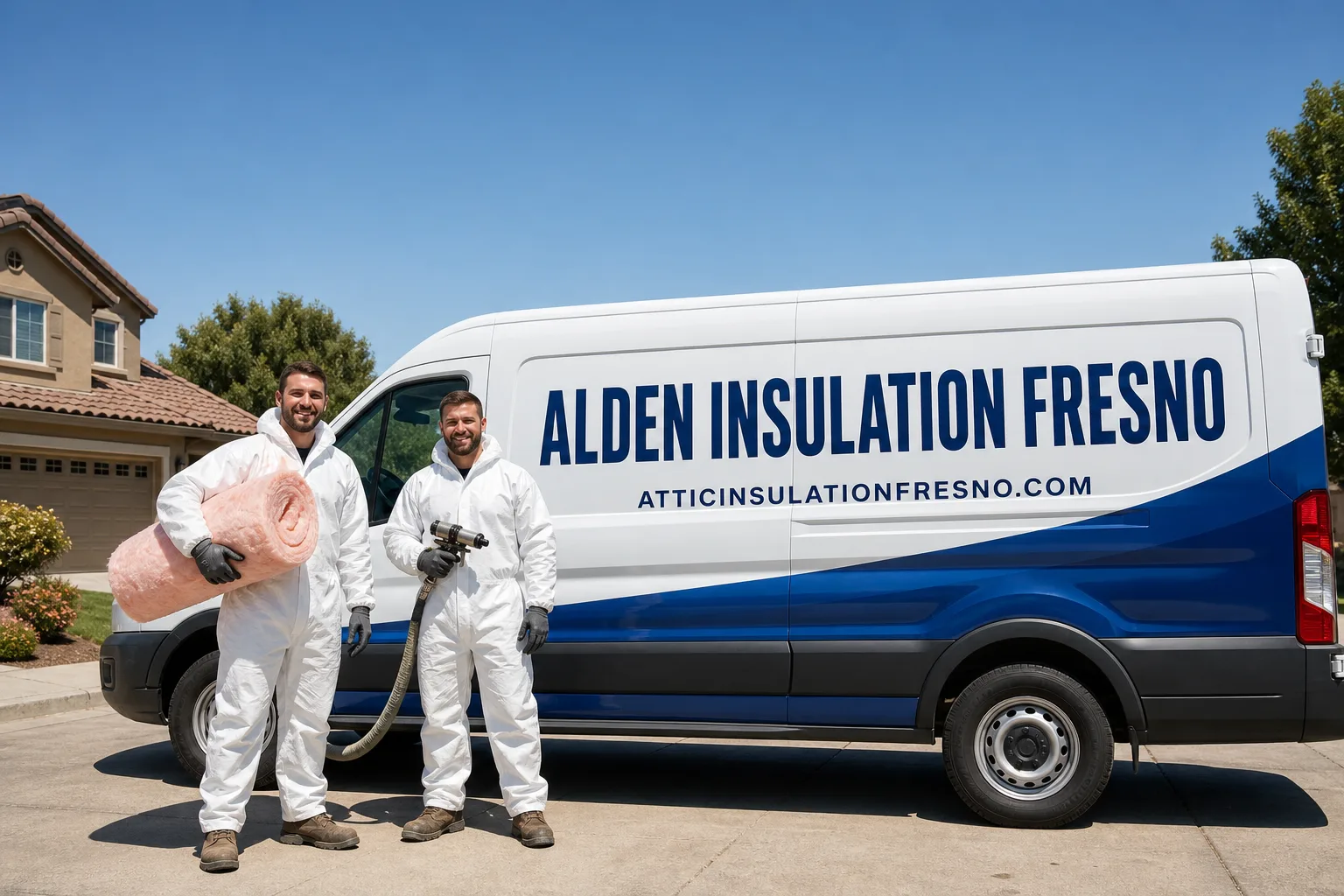
Fast, Reliable Blown In Insulation Across Firebaugh
Most blown-in insulation jobs in Firebaugh run between $1,800 and $4,200 for a typical 1,200 to 1,800 square foot attic, depending on current R-value, access, and whether old material needs removal first. Alden Insulation Fresno dispatches background-checked crews from our Central Valley office directly to Firebaugh homes, usually within 48 hours of your call. We know the housing stock here: 1940s-to-70s ranch homes, farmworker cottages near the river, and attics that have never been touched since the day they were built. Call (559) 666-2260 for a written quote. The number you approve is the number on the invoice.
Why Alden Insulation Fresno Is Firebaugh’s Preferred Blown In Insulation Company
Firebaugh homeowners call us because we show up inside the window we promised, in uniform, and we hand over a written price before a single tool comes off the truck. That is The Garrison Standard, and it applies to every job we run in Firebaugh. The 365-Day Done Right Promise backs every install in writing: if the insulation fails within a year, we come back at no charge. No fine print, no call-back loop. We answer the phone with a live person 24/7, which matters when it’s 104°F in July and your attic is radiating heat into the bedrooms. Our owner, Bryce Holloway, holds every location to the same code: written prices, written guarantees, and a clean job site when we leave.
Our crews have worked in Firebaugh long enough to know what sits inside these attics before we open them. Settled fiberglass. Rodent-damaged batts along the San Joaquin River corridor. Old newspaper and burlap stuffed into pre-1950s cottage walls. We factor that into the quote before work starts, not after we discover it.
Cellulose Insulation in Firebaugh
Cellulose insulation in Firebaugh is the most practical retrofit for older attics and walls because it fills irregular cavities that rigid batts skip. For a 1,200-square-foot attic, blown-in cellulose typically runs $1,900 to $3,100 installed in Firebaugh, depending on depth, access, and whether old material has to come out first. We install GreenFiber and other cellulose products that Firebaugh homeowners can research independently before saying yes. Cellulose settles less than loose fiberglass and packs into the corners of 1940s ranch attics, which matters when outside air swings from over 100°F in July to below freezing on January nights.
Full Removal Before New Blown-In Material
When we open an attic in Firebaugh and find compressed batts or ancient burlap insulation, covering it with new material buries the problem. Rodent urine, field dust, and fifty-year-old newspaper stay trapped. We vacuum everything out, inspect the joists and wiring, then blow in fresh cellulose to the R-value the home needs. This is not an upsell. It is the only way the new material performs.
Air Sealing Tied to the Insulation Job
Dust from surrounding agricultural fields rides into Firebaugh attics through unsealed can lights, wire penetrations, and top plates. If we blow insulation over those gaps, the dust keeps coming. We seal the penetrations with foam before we blow, every time. That is what makes the difference between a house that feels cooler and one that actually is cooler.
Blown In Attic Insulation in Firebaugh
Blown-in attic insulation in Firebaugh typically costs $2,200 to $4,200 for a ranch home under 2,000 square feet when we bring an under-insulated attic up to R-38. That number assumes removal of settled or rodent-damaged material, sealing of penetrations, and a full day’s work by a two-person crew. The price goes down if the attic is clean and accessible. It goes up if we are hauling out antique fill or working around old knob-and-tube wiring. Firebaugh’s semi-arid climate makes attic insulation the highest-impact upgrade a homeowner can make: summer cooling loads drop, winter cold spots disappear, and dust intrusion stops where the sealing is done right.
Settled Batts and Bare Joists
In pre-1970s Firebaugh attics, original fiberglass batts lose loft within two decades. They compress, the R-value drops by half or worse, and the joists sit bare. On a 105°F afternoon, those joists become thermal bridges straight into the ceiling below. We bring the attic back to R-38 with blown-in fiberglass or cellulose, covering the joists fully. That is the whole point of blown-in material: it fills the gaps batts leave behind.
Newspaper and Burlap in Pre-1950s Cottages
We have opened walls in Firebaugh farmworker cottages and found old Fresno Bee pages and burlap sacks doing the job insulation should have done. It is unstable, it holds moisture, and it does almost nothing for heat transfer. Blown-in cellulose is the only retrofit that fills those irregular wall cavities without gutting the house. We drill small access holes, blow to the proper density, and patch cleanly.
Trusted Brands We Service in Firebaugh
We install and remove insulation from Johns Manville, Knauf, Rockwool, CertainTeed, Owens Corning, Icynene, Demilec, and GreenFiber. For Firebaugh homes, we most often recommend GreenFiber cellulose for attics with rodent history or settled batts, and Johns Manville or Knauf fiberglass for open attics that need fast, even coverage. We do not push one brand. We tell you what the attic needs and let you research the material before signing. Parts and material for Firebaugh jobs are staged from our Central Valley yard, so we are not waiting on a supply house in Fresno to release an order.
Common Blown In Insulation Problems We See in Firebaugh Homes
- Settled fiberglass in pre-1970s attics. Original batts compress and leave bare joists, creating hot ceiling spots when summer afternoons push past 100°F. The fix is removal, air sealing, and blowing to R-38.
- Field dust riding into the attic. Unsealed can lights and wiring penetrations pull dust from surrounding farmland into the insulation, contaminating it and cutting its R-value. We seal before we blow.
- Rodent-damaged batts near the San Joaquin River. Batts in east-side Firebaugh homes often carry urine, droppings, and chewed wiring. Simply blowing new material over the top retains the odor and the corrosion risk. Full removal comes first.
- Old newspaper and burlap fill in pre-1950s cottages. These materials do almost nothing for thermal resistance and can hold moisture against framing. Blown-in cellulose is the practical retrofit that fills those cavities without opening walls.
Pricing for Blown In Insulation in Firebaugh, CA
Here are honest numbers for the Firebaugh market. A basic attic top-up over existing, clean insulation: $1,800 to $2,400. Full removal of settled or contaminated material plus new blown-in to R-38 on a 1,200 to 1,800 square foot ranch: $2,600 to $4,200. Wall cavity retrofits in older cottages run $3 to $5 per square foot of wall area. What moves the price: access, attic obstructions, wiring condition, and how much old material has to come out. We give you the written number before work begins, and the estimate is free. Call (559) 666-2260 to schedule a look.
We Also Serve Cities Near Firebaugh
Along with Blown In Insulation in Firebaugh, our crews cover Kerman, Madera, Fresno, and Clovis. If you are in one of those towns and need a written price on blown-in insulation, the same crew and the same guarantee apply. Our Blown In Insulation team handles attics, walls, and removal across the whole west Central Valley.
Serving Firebaugh, CA - Our Local Coverage Area
We’re based in the Firebaugh area and know this community well. Use the map below to see our service coverage - if you’re nearby, we can almost certainly help.
FAQs About Blown In Insulation in Firebaugh
Blown-in insulation slows heat transfer in both directions, which is exactly what a diurnal temperature swing demands. In Firebaugh, a 40-degree swing between a 105°F afternoon and a 65°F night means the attic absorbs heat all day and radiates it into the house after sunset. Blown-in material at R-38 keeps that heat from reaching the ceiling, and in winter it keeps overnight heat from escaping. The key is full coverage over joists, which batt insulation in older Firebaugh homes almost never has after twenty years of settling. Call (559) 666-2260 and we will give you a written price for your specific attic.
Yes. Newspaper and burlap hold moisture, provide almost no thermal resistance, and can harbor mold or pests. Blowing new insulation over them traps that moisture against framing. The fix is full removal, inspection, air sealing, then blowing in fresh cellulose or fiberglass. It adds to the cost, but skipping it means the new insulation underperforms from day one.
Blown-in insulation alone does not stop dust. The dust enters through unsealed can lights, wire penetrations, and gaps at the top plates. If those are sealed properly before we blow, the dust path is cut. That is why air sealing is part of every blown-in attic job Alden runs in Firebaugh. It is not an add-on; it is the job done correctly.
Full removal comes first, regardless of material. Once the contaminated batts are out and the attic is sealed, we typically recommend GreenFiber cellulose for river-adjacent Firebaugh homes. It packs densely into corners, deters pests better than fiberglass, and fills the irregular joist bays common in older ranch homes. A written quote includes removal, sealing, and the new material, so you know the total before we start.
Properly installed blown-in cellulose or fiberglass lasts 30 to 50 years in Firebaugh’s climate. The material itself does not degrade. What fails is air sealing, which lets dust and heat in, or rodents, which contaminate the material. That is why we guarantee our installation in writing for 365 days and why we recommend an attic inspection every five years in agricultural areas like Firebaugh. If anything fails in that first year, we return at no charge.
If your Firebaugh attic needs blown-in insulation, removal, or air sealing, call Alden Insulation Fresno at (559) 666-2260. A live person answers. You get a written price before work begins and a written guarantee for a full year after.
Written by Bryce Holloway, Owner at Alden Attic Insulation, serving Firebaugh and the surrounding Central Valley since 2002.